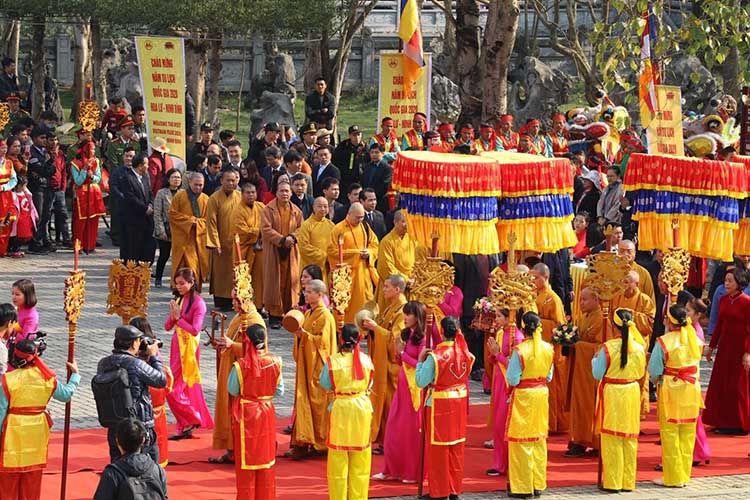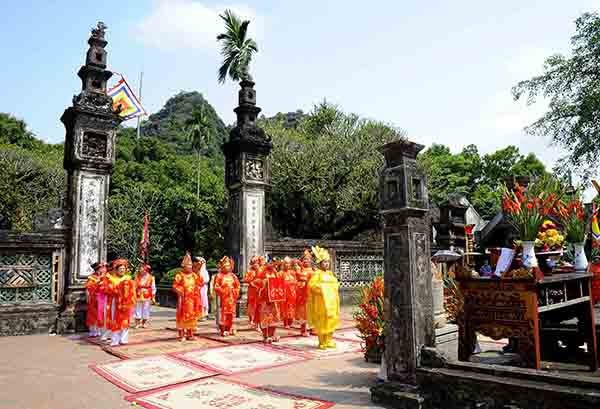
Every year, on the 18th day of the 3rd lunar month, the Tràng An Festival (honoring Saint Quý Minh Đại Vương) is held at the Tràng An Ecotourism Complex.
The Tràng An Festival (commemorating Saint Quý Minh Đại Vương) is one of the most unique traditional festivals in Ninh Bình, as it takes place in a landscape of crystal-clear lakes, sparkling caves, and surrounded by majestic mountains.
According to folk legends, Saint Quý Minh Đại Vương was one of three brothers, all generals who were deified (Saint Tản Viên, Saint Cao Sơn, and Saint Quý Minh). He is known for his role in guarding the Sơn Nam region and protecting the country during the reign of King Hùng Duệ Vương (the 18th Hùng King). He is regarded as a “high-ranking deity” and has been honored with royal decrees across many dynasties. He is worshiped widely, becoming the village god in many regions.
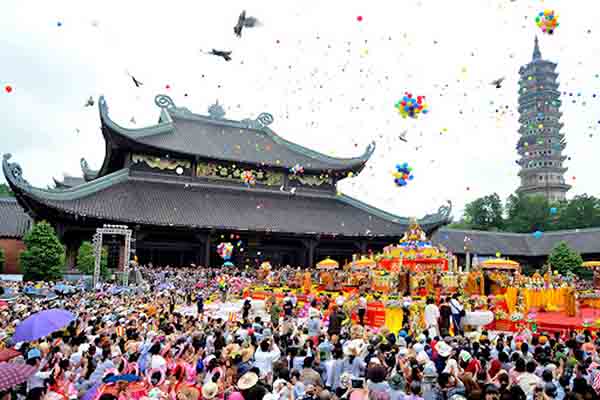
Saint Quý Minh Đại Vương is one of the many deities worshiped in folk beliefs. Along the length of Vietnam, from north to south, there are numerous temples, communal houses, and palaces dedicated to revered deities and village gods. This is a beautiful cultural tradition that embodies the spirit of “Uống nước nhớ nguồn” (Remembering the source of the water you drink), reflecting the importance of honoring those who contributed to the nation’s foundation and protection. In Ninh Bình, Saint Quý Minh is worshiped at the Sinh Dược communal house, Gia Sinh commune (Gia Viễn), on Cánh Diều Mountain (Ninh Bình city), at Thiện Dưỡng Mountain, Kê Thượng Temple (Ninh Vân commune, Hoa Lư), and at Trần Temple within the Tràng An spiritual tourism complex.
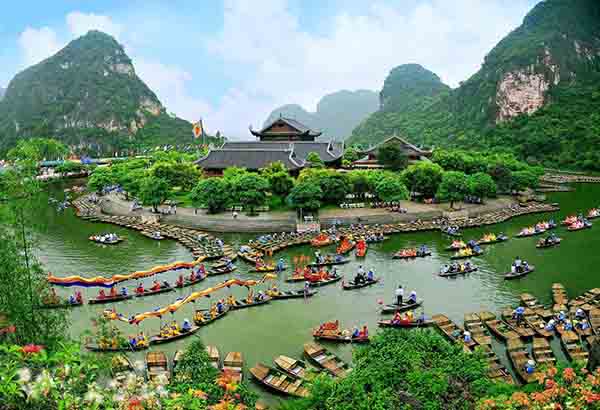
On the festival day, thousands of boats gather at Tam Quan Wharf from early morning, preparing for a grand celebration with rituals such as the water procession, offerings, and the release of creatures into the river. As is typical with traditional festivals tied to spiritual beliefs, these ceremonies carry deep spiritual significance, allowing people to connect with their origins, express their wishes for peace, favorable weather, and abundant crops through rituals involving the heavens, ancestors, and deities.
At 9:00 AM, the Tràng An Festival officially begins. Following the opening drum beats on the shore and the sound of drums on boats, a procession of over 100 people carrying a palanquin and the tablet of Saint Quý Minh Đại Vương, accompanied by thousands of tourists on about 1,000 boats, starts the procession. The procession creates a solemn yet vibrant atmosphere. Starting from the boat dock, the procession covers a 5-kilometer water route through 11 caves along the Sào Khê River. After about an hour on the water, the procession splits into two: one group continues by boat while the other climbs three mountains, covering about 3 kilometers, to reach Nội Lâm Temple for the religious ceremonies.
Throughout the journey to the Trần Temple, participants are immersed in nature, enjoying the poetic scenery of crystal-clear lakes, shimmering caves, and watching fish swim beneath green moss and colorful vegetation. The boats pause at the Trần Temple dock, and visitors continue their journey by hiking up the mountain to the temple. Although the trail is steep and narrow, the breathtaking scenery makes the hike refreshing and rewarding.
The Trần Temple, perched on a high mountain, is dedicated to Saint Quý Minh Đại Vương and has been a sacred site for centuries. It was originally built by King Đinh Tiên Hoàng in the 10th century to honor the saint and secure the land in the four cardinal directions. The original wooden structure was damaged over time, and during the Trần Dynasty, it was rebuilt with famous stone columns that have remained intact to this day, giving the temple its current name, Trần Temple. Located in a picturesque area of the Tràng An Ecotourism Complex, the temple is renowned for its unique stone columns carved with the Four Sacred Creatures (dragon, unicorn, tortoise, and phoenix).
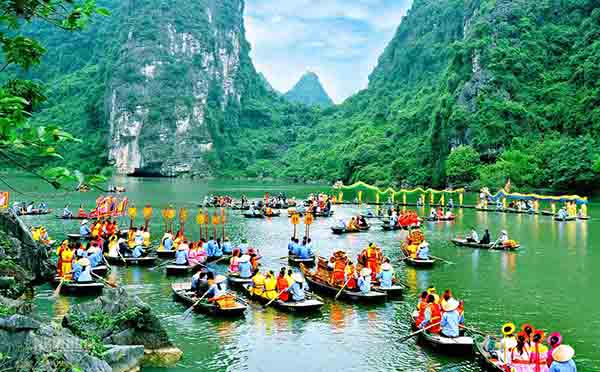
Visitors to the festival not only get to admire the unique beauty of Tràng An, often referred to as “mountains are the fortress, rivers are the roads, caves are the palaces,” but they also experience the excitement of a festival where the path is never the same. This fresh and exhilarating experience feels like stepping into a “fairyland,” evoking a deep sense of pride and reverence for the past and inspiring a stronger connection to and preservation of the natural gifts bestowed upon the land.
Anyone who has participated in the Tràng An Festival or visited the Tràng An Scenic Landscape Complex will never forget this unique, traditional celebration and will always be in awe of the mystical beauty of the land that gave birth to kings and saints.