Where is Son Doong Cave?
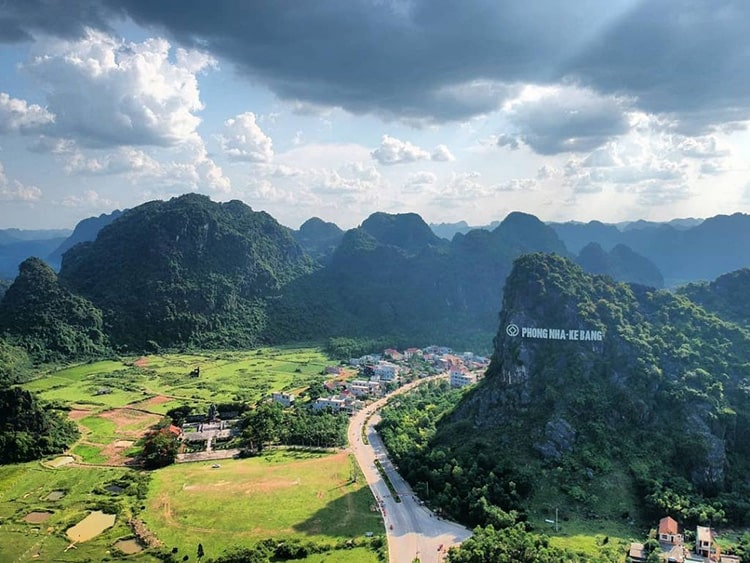
Son Doong Cave is the largest cave on the planet, located in the Phong Nha – Ke Bang cave system, in Tan Trach commune, Bo Trach district, Quang Binh province.
Known as the world’s largest natural cave, Son Doong Cave stretches nearly 9 kilometers in length, with a colossal volume of 38.5 million cubic meters. This size surpasses Malaysia’s Deer Cave, which was once considered the largest cave.
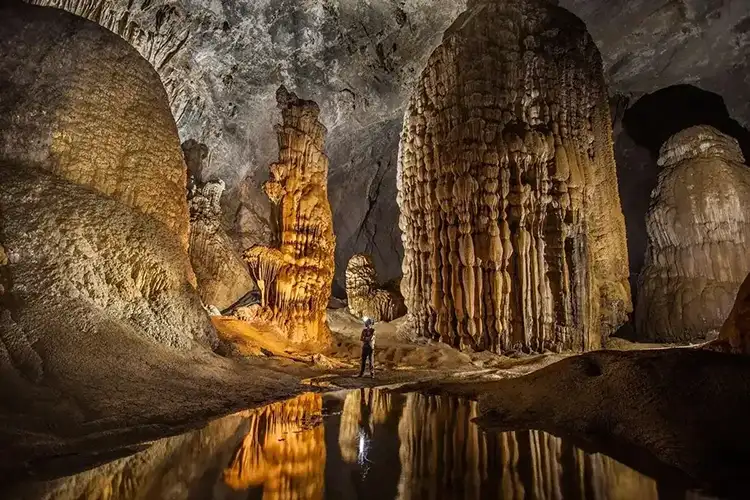
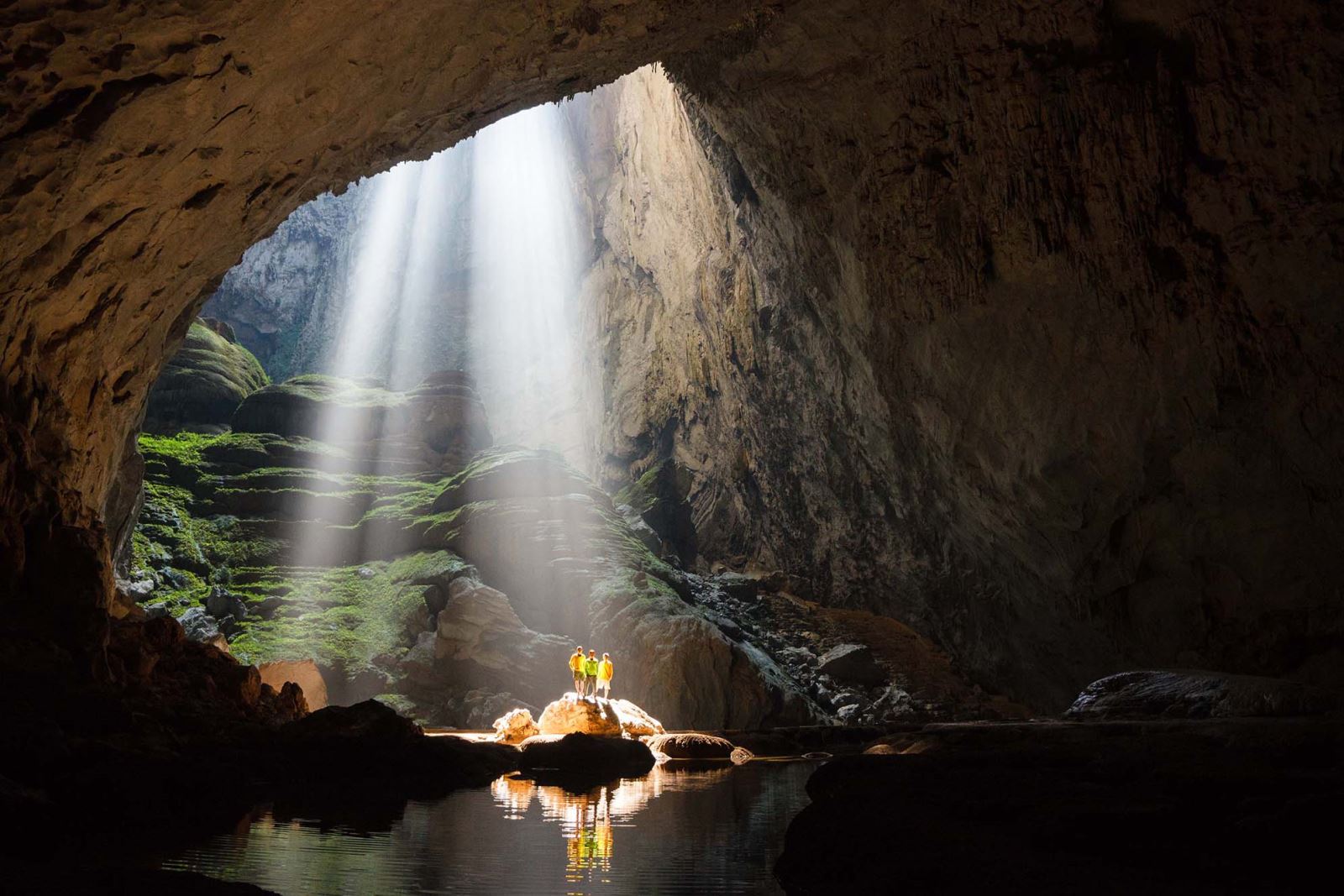
However, what truly captivates the world’s attention is the fascinating nature within Son Doong Cave. It not only contains massive stalactites, over 80 meters high, but also features a primeval forest, a unique ecosystem, and a separate underground river, still largely unexplored and full of mysteries.
Origin of the Name “Son Doong”
Typically, the first person to discover a cave has the privilege of naming it. After an expedition in April 2009, Mr. Ho Khanh, who discovered the cave, was asked to name it. Although many suggested using his own name to honor his discovery, after discussions with the expedition team, he chose to name the cave “Son Doong.” “Son” means mountain, and “Doong” is the name of a valley through which the Rào Thương river flows. This name also hints at the cave’s location within a limestone mountain, with an underground river flowing through it.
Formation History of Son Doong Cave
Son Doong Cave belongs to one of Asia’s oldest limestone mountain systems, dating back 400 to 450 million years. However, its formation is relatively young, only about 2-3 million years old. This has been determined through the analysis of fossilized sediment samples.
The creation of Son Doong Cave is linked to a fault in the Truong Son mountain range. The powerful flow of water from the Rào Thương river combined with water from the Khe Ry Cave (the longest water cave in Asia) formed a large underground river. The continuous erosion of this river over millions of years created the massive tunnel inside the mountain. Additionally, cracks in the cave ceiling were eroded and collapsed, forming giant sinkholes that opened up to the outside world.
Milestones in the Discovery of Son Doong Cave
The story of the discovery of Son Doong Cave, the largest natural cave on Earth, is intertwined with the life of Ho Khanh, a son of the Quang Binh mountains. Born and raised in Son Trach, from an early age, Khanh was familiar with the life of a mountain dweller, wandering the ancient forests of Phong Nha – Ke Bang in search of livelihood.
In 1990, during a trip to the forest looking for agarwood, a sudden rainstorm led him to a small cave hidden behind a rock wall. From the entrance, thick mist poured out, accompanied by the sound of rushing water from deep inside. Feeling the cold breeze emanating from the cave, Khanh decided to leave without exploring further. Over time, the cave’s location faded into oblivion.
Many years later, in 2007, cave experts Howard and Deb Limbert came to Phong Nha to study the cave system. Based on the terrain structure, they believed there was a massive cave hidden behind En Cave. In a conversation, Khanh casually mentioned the mysterious cave he had found years earlier. His story piqued the curiosity of the experts, urging them to search for the cave.
Encouraged by the experts, Khanh tirelessly searched for traces of the cave. In 2008, during a hunting trip, he finally found the entrance again.
In April 2009, the expedition led by Howard Limbert, in collaboration with the University of Natural Sciences, entered the cave. Peter MacNab was the first person to step into the cave, and this was also Khanh’s first time exploring its depths. Measurements taken with laser equipment confirmed that this was the largest natural cave in the world.
The discovery of Son Doong Cave made a global impact. The cave’s size, beauty, and unique ecosystem left the world in awe.
The Fascinating Nature Inside Son Doong Cave
Geologically, Son Doong Cave was formed in the limestone of Ke Bang approximately 2-3 million years ago. The process of erosion and abrasion by water created vast caves, massive sinkholes, and unique stalactites and stalagmites inside Son Doong Cave.
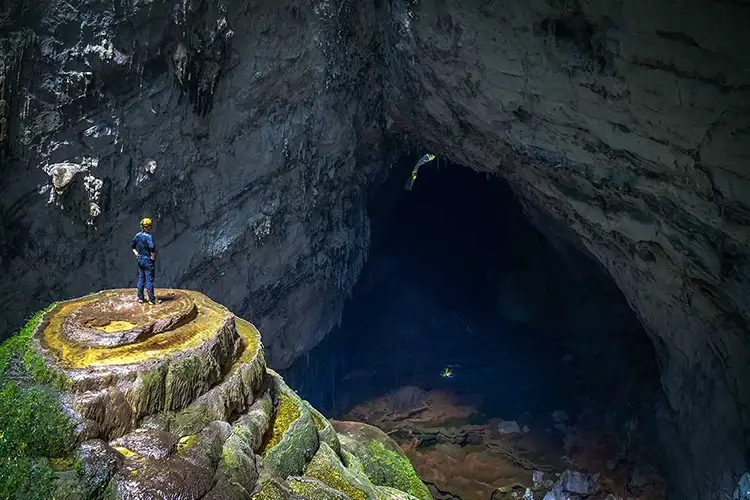
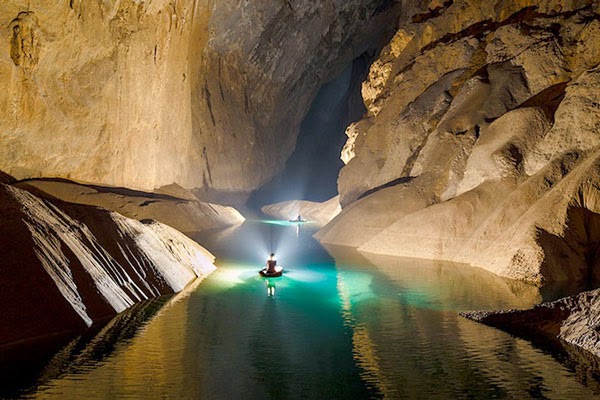
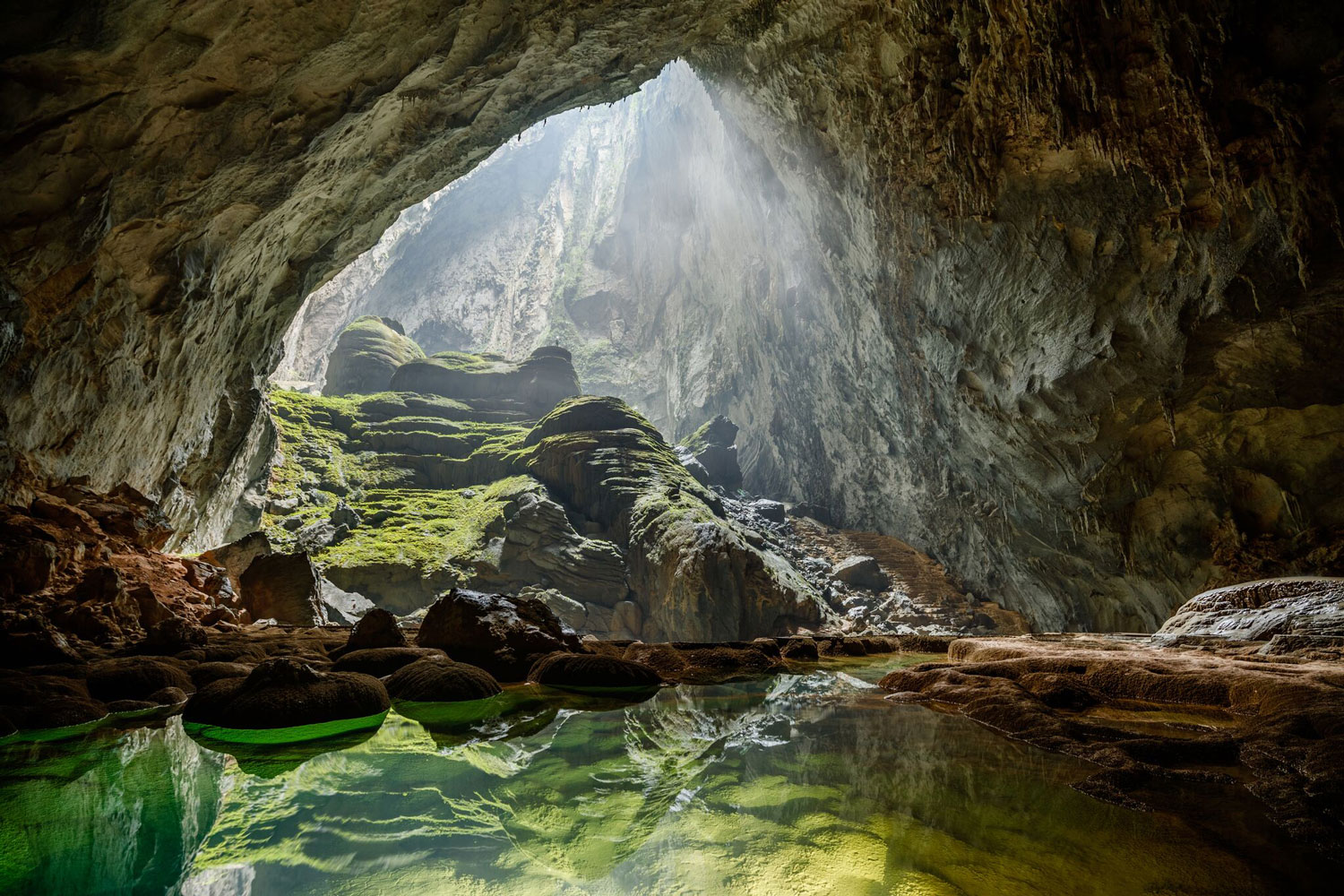
In terms of topography, the inside of Son Doong Cave resembles a magical world within the earth. It contains its own rivers, underground lakes, primeval forests, and even clouds. The ceiling height can reach up to 200 meters, enough to accommodate a 40-story building. The fascinating nature of Son Doong Cave leaves anyone who sees it in awe.
Ecologically, Son Doong Cave is home to many rare plant and animal species, including some that have never been discovered before. This biodiversity creates a unique and rich ecosystem, attracting the attention of scientists and nature lovers alike. The ecosystem of Son Doong Cave is one of the cave’s most remarkable features.
Exploring the Majestic Son Doong Cave through Images
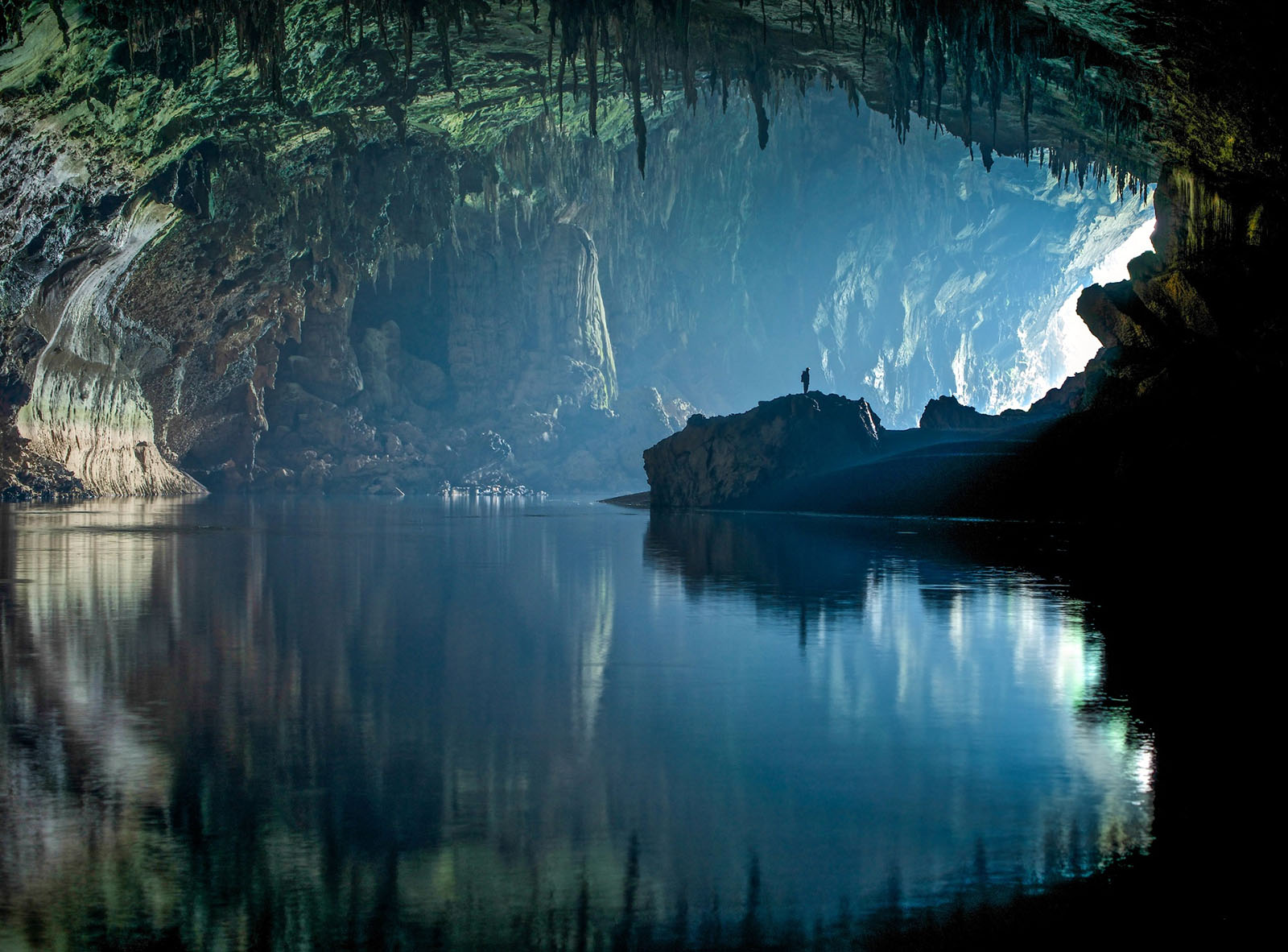
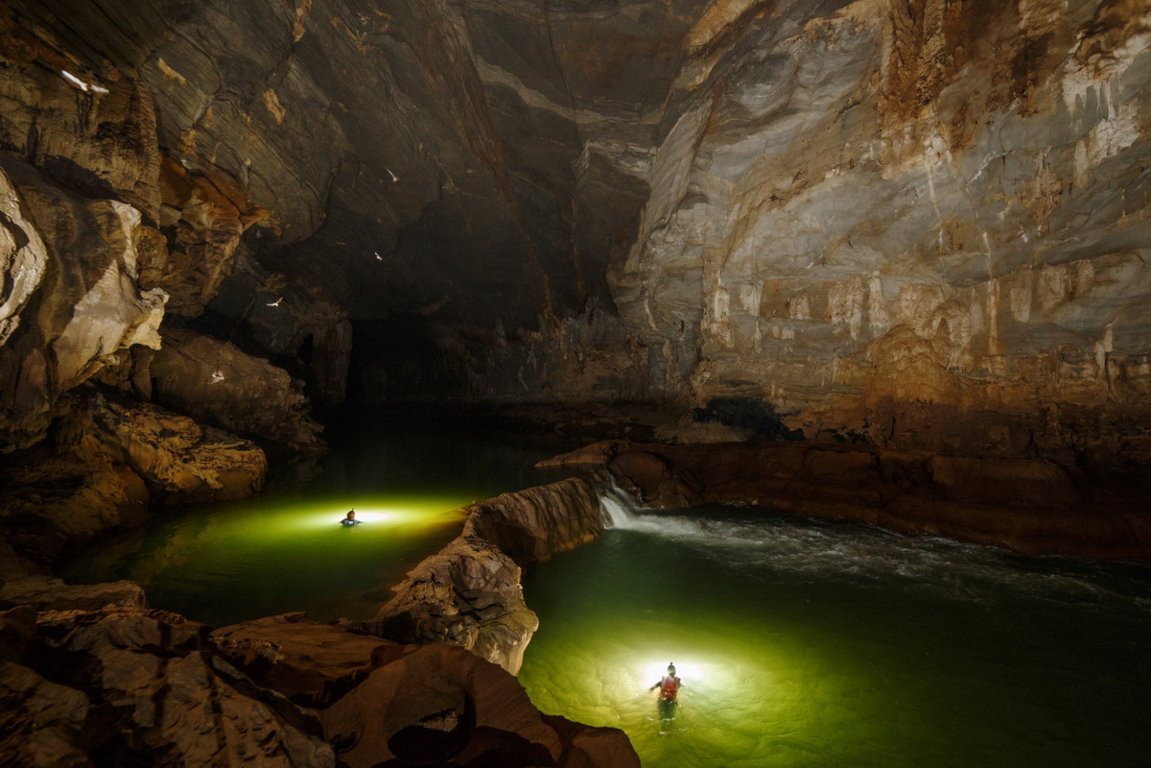
The panoramic view of Son Doong Cave always impresses viewers with its magnificent beauty and grandeur of nature. From the most beautiful images of Son Doong Cave to the fascinating natural scenes inside, all these images help paint a beautiful picture of the largest cave in the world.
Now, let’s join Jungle Boss in admiring a few stunning images of Son Doong Cave below: