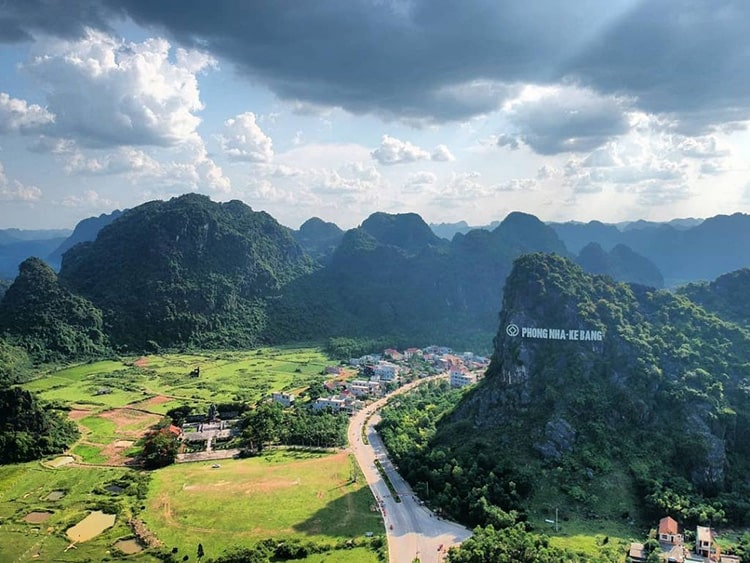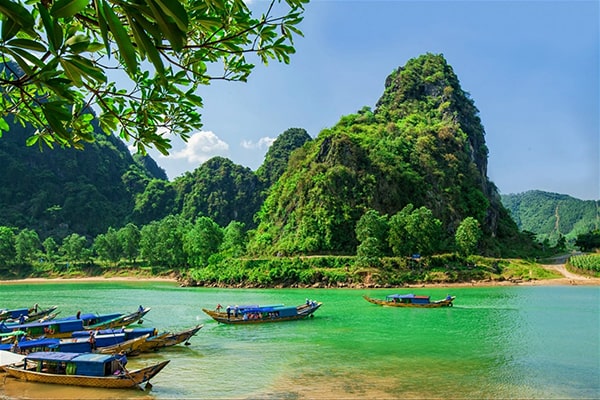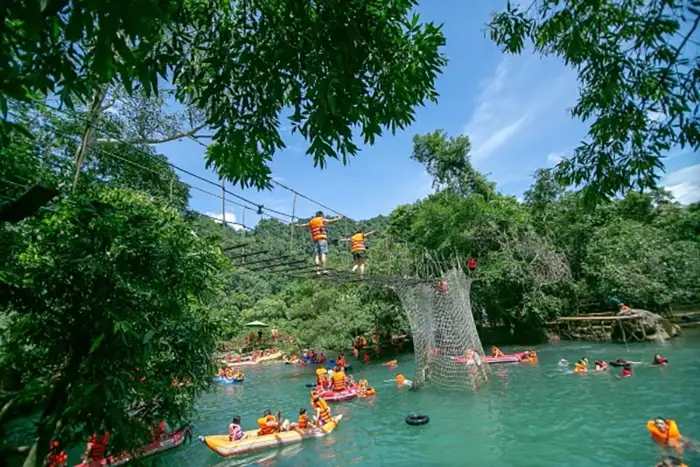
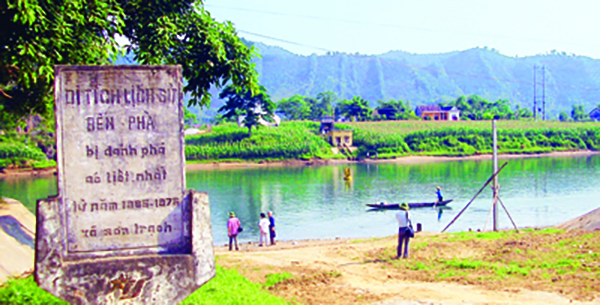
The Xuân Sơn ferry is located on the banks of the Son River, within the Phong Nha town area, Bố Trạch district, Quảng Bình province. It is one of the national historical monuments in the system of Trường Sơn Road and Hồ Chí Minh Road historic
Traveling along the Son River, visitors can enjoy the peaceful beauty of riverside villages, vast cornfields, and rice paddies stretching in neat rows at the foot of the mountains. Particularly, on the opposite side of the river, there is a stone memorial with an inscription that reads “Xuân Sơn Ferry Historic
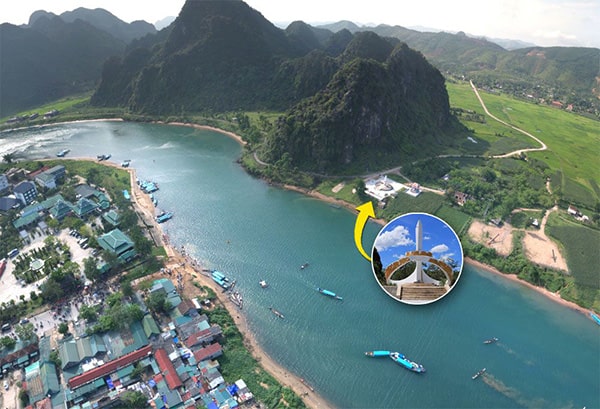
The Xuân Sơn Ferry in Quảng Bình stands as a historical monument commemorating a glorious past of the Quảng Bình people, as well as the entire Vietnamese nation. It marks the sacrifices and losses endured during the resistance against the American invasion, where countless people gave their lives to secure independence and national unity.
The ferry officially came into existence in 1965, following the opening of the Quyết Thắng Road 20. This ferry became one of the critical lifelines to support the South and facilitate the transportation of people and goods across the river, connecting roads 12, 15, and 20 Quyet Thang
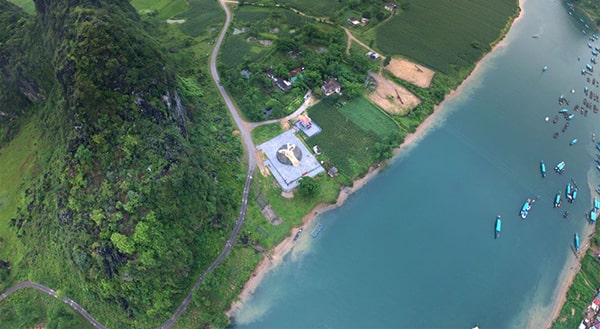
In the early years of the anti-American resistance, our forces used a hand-pulled ferry capable of carrying 18 tons to link the two ferry stations, Xuân Sơn and Phong Nha. Due to its strategic location, Xuân Sơn Ferry became a target for American forces, who dropped large bombs in an attempt to block the supply route to the South. Despite the intense attacks, the people and soldiers of Quảng Bình remained undeterred, even establishing a second ferry named Nguyễn Văn Trỗi or Ferry B to divert the enemy’s attention and ensure the safe transport of people and goods across the river. As the Americans escalated their bombing campaigns, our forces grew even more resolute, determined to use all resources from the North to support the battle for independence in the South.
After suffering severe setbacks in the Southern battlefield, the American forces intensified their attacks on Xuân Sơn Ferry in an effort to cut off the South’s supplies and regain the upper hand. During the day, they dropped bombs from aircraft, and at night, they released flares and mines to probe and attack.
In 1986, Xuân Sơn Ferry was officially recognized as a national historical site. On December 9, 2013, the Prime Minister signed a decision to classify it as a Special National Historical Site, part of the Trường Sơn historical monument system.
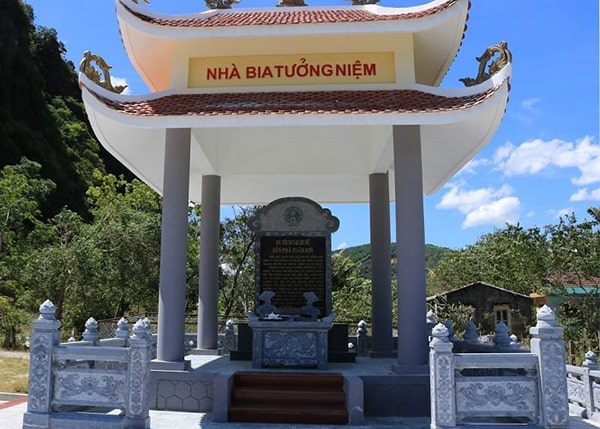
Looking back on those glorious years, it’s clear how much blood and sweat the people sacrificed here. This place marks the efforts of unsung heroes who overcame bombs and gunfire to connect the two banks, wholeheartedly contributing to the battle in the South with the ultimate goal of liberating the South and reunifying the country.
This article provides information about the Xuân Sơn Ferry Historical Site and is hoped to be useful for those exploring tourism in Quảng Bình.