Located in the serene countryside of My Thuy Commune, Le Thuy District, Hoằng Phúc Pagoda is one of the oldest and most renowned temples in Quang Binh, boasting a history of over 700 years. The pagoda spans a vast area of 10,000 square meters, situated to the right of the Kien Giang River, about 6 kilometers from the center of Le
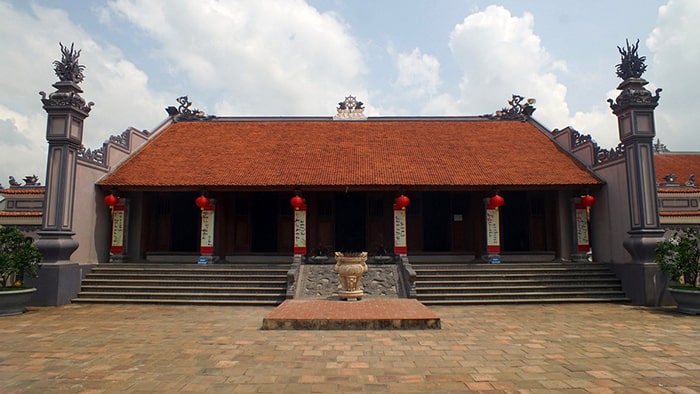
The temple was initially named Tri Kien Hermitage. In 1301, during a southern journey, King-turned-Buddhist monk Tran Nhan Tong visited the hermitage to deliver sermons and spread Buddhist teachings. He renamed Tri Kien Hermitage to Kinh Thien Hermitage.
In 1609, Lord Nguyen Hoang, on his way to Thuan Hoa, rested at Kinh Thien Hermitage. Shortly after, he ordered the construction of a large pagoda on the
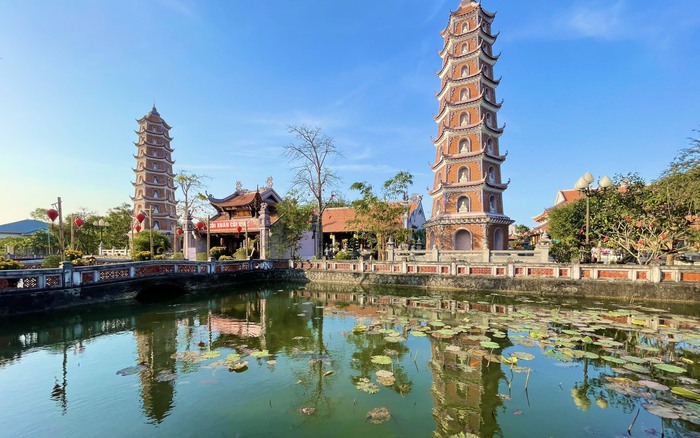
The temple gate features the inscription “Tả Quảng Độ Môn” (Left Broad Passage Gate). Researchers have noted that such a grand gate was rare among temples in Central Vietnam during that era.
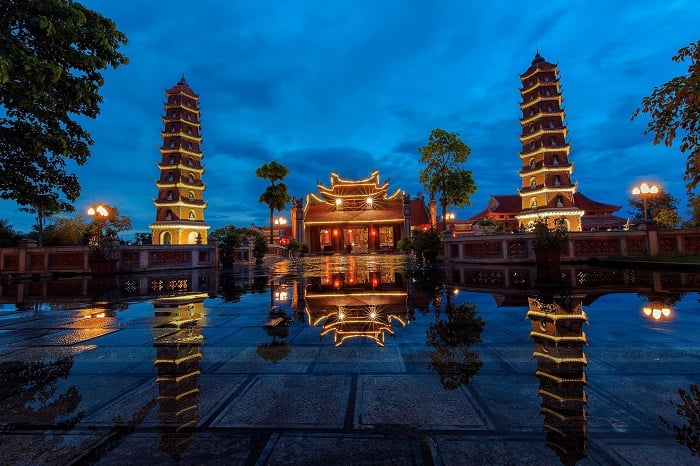
In front of the Tam Bao (Main Hall) are two nine-story Buddha towers. In 1918, a mandarin from the Nguyen Dynasty funded renovations, constructing a screen wall, the Tam Quan (Three-Entrance Gate), and two auxil
During the resistance wars against the French and Americans, the pagoda served as a meeting place, a shelter for revolutionaries, and a storage site for weapons. Over time, it suffered significant damage due to the ravages of war and natu
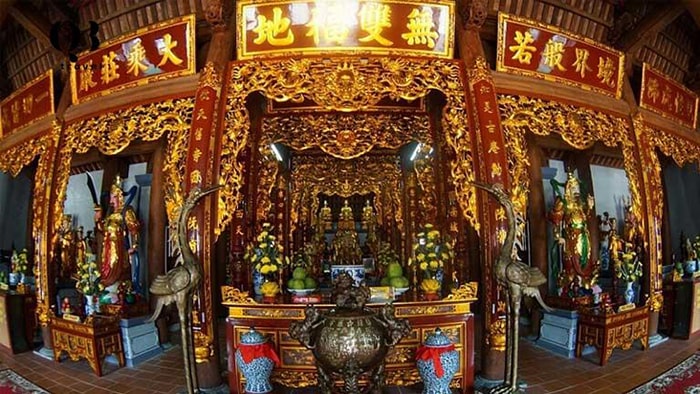
In 2014, the temple underwent restoration, adhering to traditional Vietnamese architectural styles. The restoration included the outer and inner Tam Quan gates, Buddha towers, Tam Bao Hall, left and right corridors, the ancestral house, and the votive-paper burning chamber. The newly restored pago
The main hall houses a serene Buddha altar at its center. During the first full moon of the year, visitors, such as Nguyen Thi Tuyen, 68, from Xuan Thuy Commune, often come to offer incense. She remarked on the temple’s tranquility, describing it as a sacred place frequently visited by locals. Her family visits the temple several times a year, particularly during the first full moon if they cannot make it during the Tet holiday.
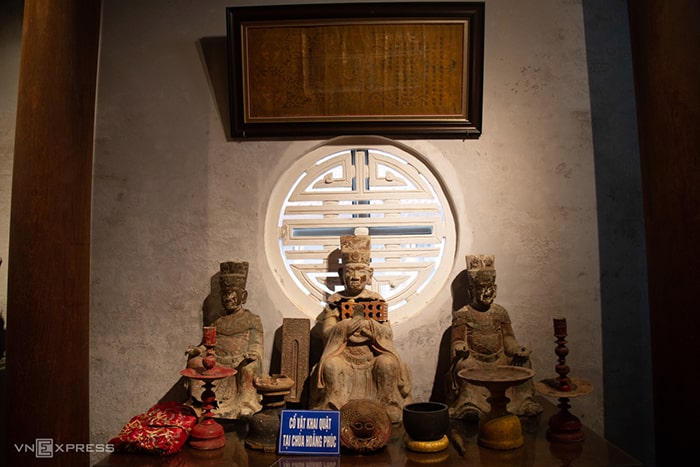
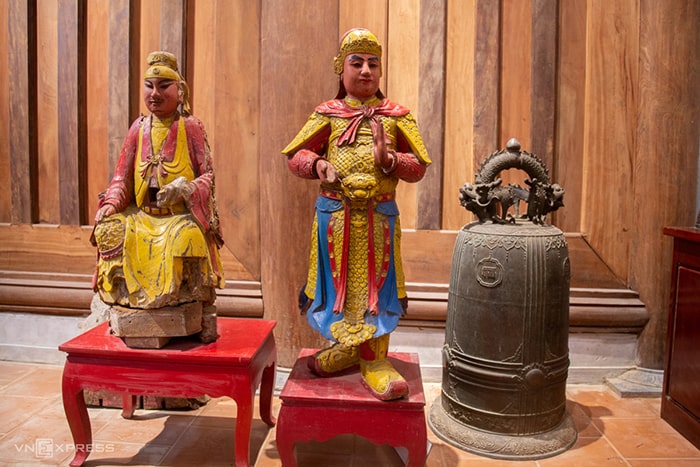
The pagoda preserves valuable relics, including 19th-century lacquered and gilded wooden statues of Giám Trai Sứ Giả (Vegetarian Spirit Messenger) and Hộ Pháp (Dharma Protector). To the right of these statues stands a large bronze bell (Dai Hong Chung) measuring 1.15 meters in height, with a body diameter of 0.57 meters, a circumference of 1.45 meters, and weighing 80 kilograms, cast during the reign of Emperor Minh Mang.
In 2016, on the occasion of the temple’s inauguration, the Buddhist community of Myanmar gifted Hoằng Phúc Pagoda a sacred relic – a bone fragment of Buddha Shakyamuni – brought from the Shwedagon Pagoda, Myanmar’s most revered temple.
In recognition of its cultural and historical significance, Hoằng Phúc Pagoda was designated a National Historical Monument in December 2015. Today, it remains a spiritual haven for locals and visitors, offering a glimpse into the profound cultural and traditional values of the region and the nation.